Discover Essential Types of Home Additions: A Complete Guide for Interior Designers and Homeowners
Home additions expand usable living space, solve functional constraints, and often increase a property's marketability when planned correctly. This guide explains the most popular types of home additions, why each approach works structurally and programmatically, and what interior designers and homeowners need to consider when deciding how to add square footage. You will learn definitions and use-cases for room additions, second-story builds, garage conversions, sunrooms and four-season rooms, accessory dwelling units (ADUs), master suites, and mudrooms, plus practical cost and ROI guidance and SaaS-driven workflows designers can use to streamline planning. The article also covers permitting and when to engage an architect or contractor, and it maps software features—like 3D visualization and template libraries—to common addition challenges. Read on for concise featured-snippet style answers, EAV comparison tables, actionable lists, and product-to-workflow mappings that bridge inspiration with execution.
What Are the Most Popular Types of Home Additions?
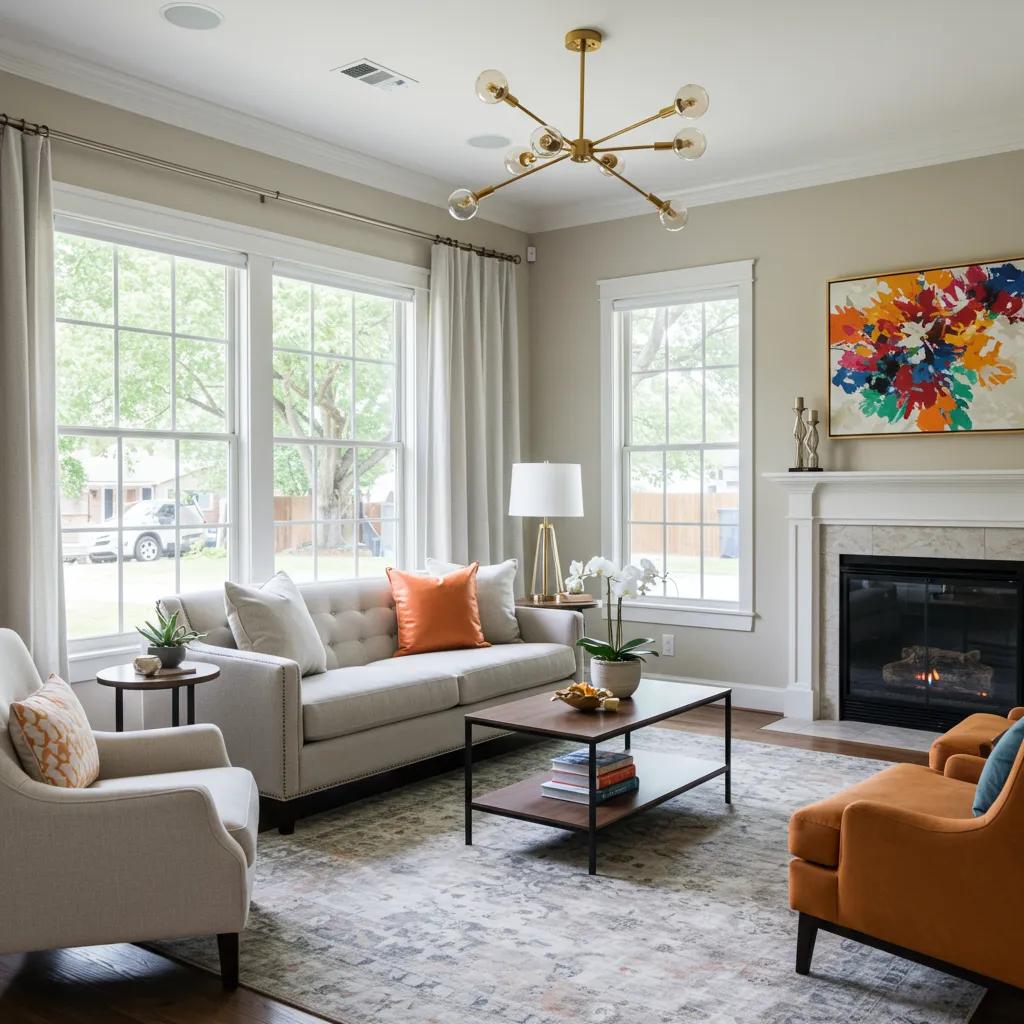
A home addition is any constructed increase of conditioned square footage or fully enclosed living area that integrates with existing structure, systems, and circulation to deliver new function. Additions work by extending the building envelope or repurposing existing space, resolving constraints such as cramped layouts or inadequate storage while improving daylighting, flow, and long-term livability. Popular addition types balance cost, permitted scope, and resale value differently; designers choose solutions based on site constraints, homeowner goals, and regulatory frameworks. Below is a concise taxonomy of widely used additions with one-line definitions and typical use cases to help designers and homeowners pick the right strategy.
Common home addition types include:
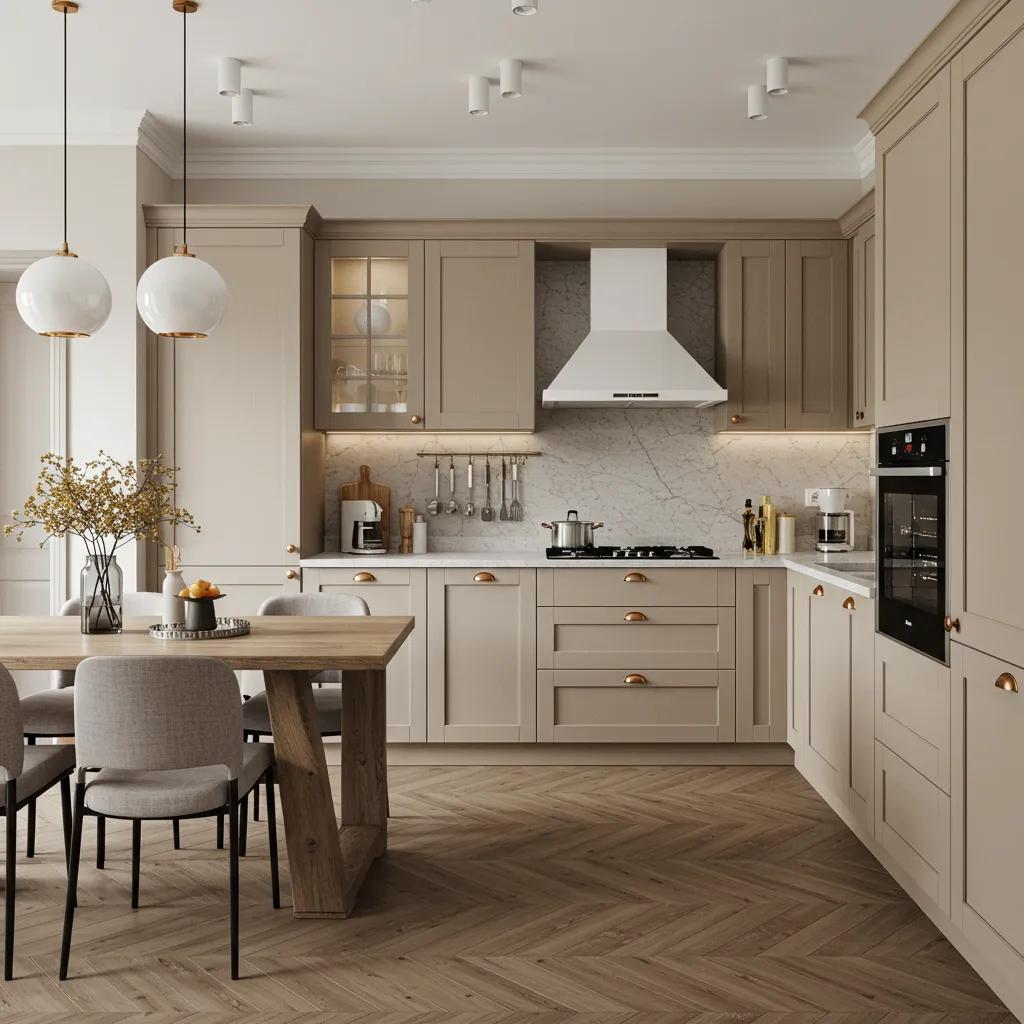
Room addition: A horizontal extension adding a bedroom, kitchen, or family room to increase living area.
Second story addition: Building up over an existing footprint to maximize square footage without reducing yard space.
Garage conversion: Repurposing garage volume into habitable space like a studio or guest suite.
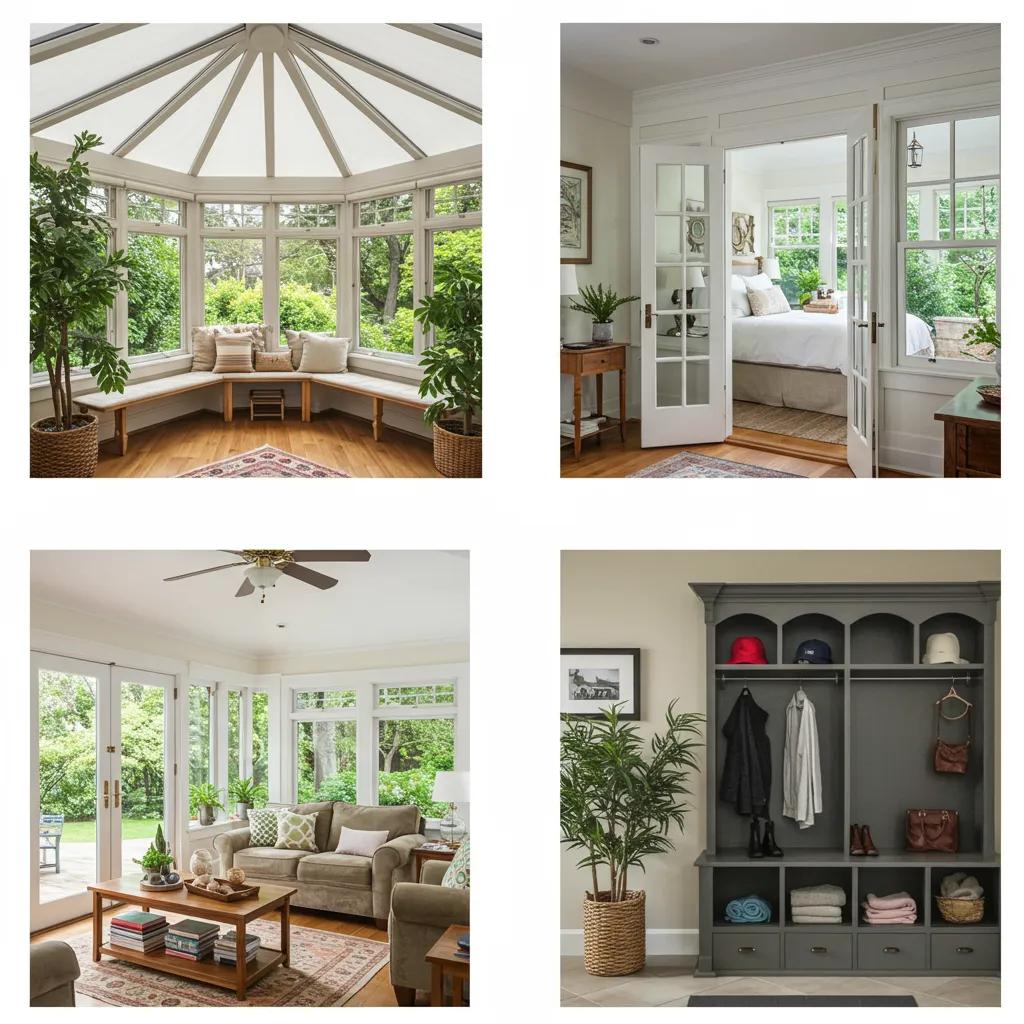
Sunroom / four-season room: Glazed additions that increase daylight and can be tailored for seasonal or year-round use.
Accessory Dwelling Unit (ADU): Detached or attached secondary unit providing rental income or multi-generational living.
Master suite addition: Enlarging sleeping quarters to include en-suite baths and walk-in closets for privacy and luxury.
Mudroom addition: Small, functional space improving entry organization and transition between outdoors and main living areas.
These types form the basis for design decisions that follow; the next subsections explain which room additions offer the best functionality and when to favor building up over building out.
Which Room Additions Offer the Best Functionality and Space?
Room additions are chosen based on the homeowner’s primary goals—more family space, an in-law suite, a dedicated home office, or rental income—and on how the new room ties into existing plumbing, electrical, and structural systems. A kitchen addition often yields high daily-use benefit and resale appeal, while a bathroom bump-out or additional half bath can dramatically improve circulation for growing households. Functionality depends on adjacency: placing a new bedroom near existing mechanical stacks reduces cost, while locating a home office in a quieter wing improves usability for remote work. Proper planning addresses load-bearing walls, service risers, and accessible circulation to avoid compromises that undercut long-term value, and the next paragraph compares these horizontal additions with second-story solutions.
How Do Second Story Additions Expand Your Home Efficiently?
Second story additions efficiently increase conditioned square footage when lot size or setback rules limit outward expansion, preserving outdoor living while adding entire floorplates for bedrooms, baths, or flexible loft spaces. Structurally, building upward requires foundation and framing assessments, potential reinforcement of existing walls, and careful integration of vertical systems like stairs and HVAC risers. Though typically more complex than ground-level additions, second-story projects can deliver higher net usable area per permit and often perform well for resale because they maintain yard amenities. Designers should sequence structural review, schematic layout, and client sign-off early; the following section explains how repurposing garages and creating ADUs can be a cost-effective alternative.
How Can Garage Conversions and ADUs Maximize Existing Space?
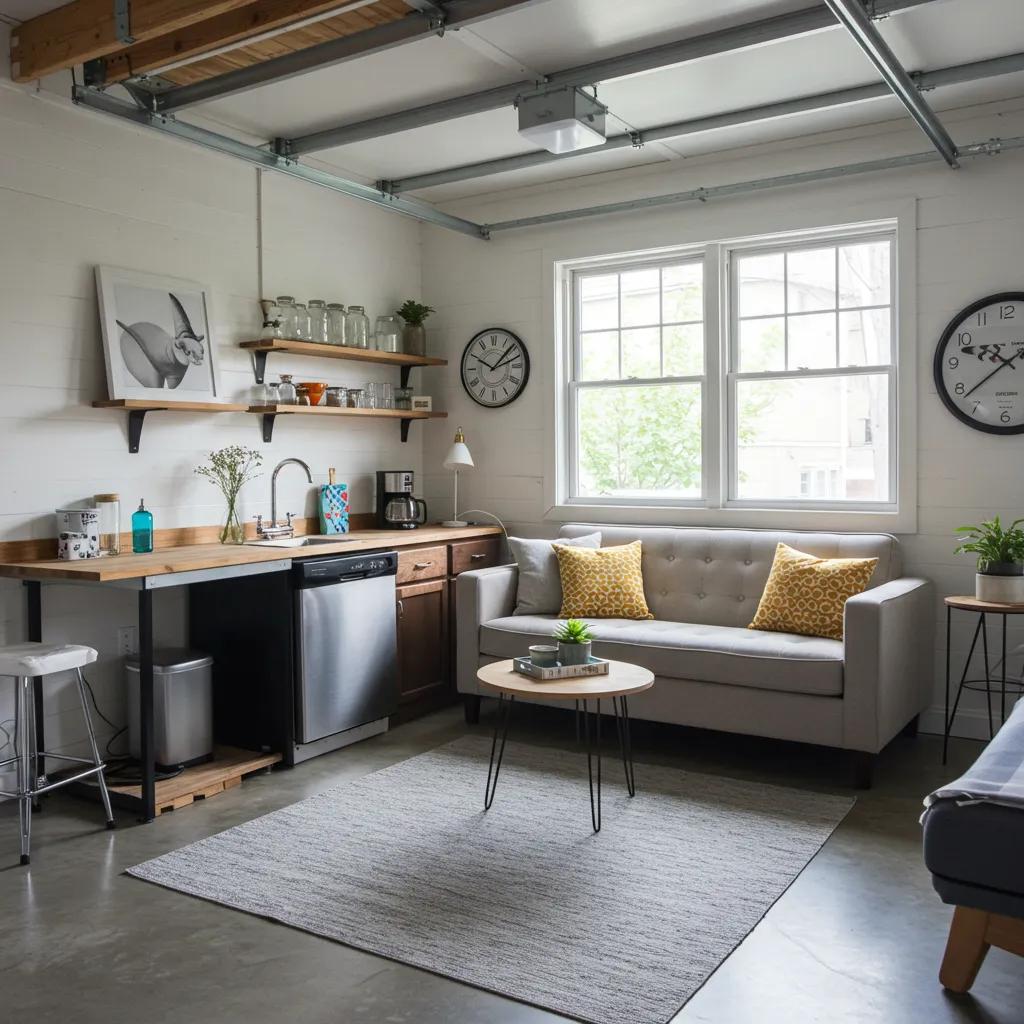
Garage conversions and ADUs reuse or add dwelling space with different cost and regulatory profiles, providing flexible living options that can meet rental, guest, or aging-in-place needs. A garage conversion typically converts existing envelope and utilities into habitable rooms at lower cost and faster schedule compared with new construction, while an ADU—attached or detached—creates self-contained living with separate egress and often separate utilities. Both strategies require attention to insulation, HVAC extension, and zoning/permitting specifics, and designers should evaluate utility separation and egress early in planning to avoid retrofit surprises. The benefits and design tactics for garage conversions lead naturally into a short benefits list for flexible living.
Garage conversion benefits include:
Cost-effective reuse: Converting existing structure lowers material and labor needs compared to ground-up additions.
Quicker timeline: Permits and construction typically take less time than full additions, reducing disruption.
High functional flexibility: Garages can become studios, offices, or guest suites with modest utilities upgrades.
These benefits make garage conversions attractive for clients seeking rapid value; the next subsection addresses specific design approaches to insulation, flooring, and HVAC to ensure comfortable, code-compliant spaces.
What Are the Benefits of Garage Conversion for Flexible Living?
Converting a garage leverages an existing footprint to generate flexible interior space with lower cost per square foot than comparable additions, and it often achieves faster permitting because it uses existing foundations and rooflines. Designers should prioritize thermal upgrades—wall and ceiling insulation, high-performance windows in new openings, and continuous air barriers—to meet habitability standards while improving comfort. Flooring choices and moisture management matter: installing a vapor-stable underlayment and appropriate finish floor prevents cold, damp surfaces common in garage conversions. Early coordination with contractors on HVAC extensions and electrical panels reduces change orders and creates clear timelines, and the next subsection explores how ADUs differ in purpose and regulation.
How Do Accessory Dwelling Units Enhance Multi-Generational Living?
Accessory Dwelling Units (ADUs) provide autonomous living spaces that support multi-generational households, independent rental income, or home-based workspaces while preserving privacy between occupants. ADUs can be attached, detached, or conversions of existing spaces; they typically require separate egress, considerations for separate utilities or meter arrangements, and conformity to local ADU regulations that affect allowable size and occupancy. Designers should incorporate accessibility features, kitchenette planning, and sound separation to ensure that ADUs function as self-contained units while buffering main house activity. Early engagement with permitting authorities and financial advisors helps clients evaluate rental potential and zoning constraints, and the next major section focuses on glazing, insulation, and HVAC choices for sunrooms and four-season rooms.
What Design Considerations Should Interior Designers Know for Sunrooms and Four-Season Rooms?
Sunrooms and four-season rooms differ primarily in thermal performance: sunrooms often prioritize daylight and seasonal enjoyment, while four-season rooms incorporate envelope upgrades for year-round conditioning. Key design considerations include glazing selection and orientation to manage solar gain, insulation levels and thermal breaks in framing, and HVAC strategy—whether to extend central systems or use dedicated heat pump solutions. Material choices for fenestration, frames, and interior finishes affect longevity, maintenance, and energy performance; designers must balance aesthetics with U-value and solar heat gain coefficient (SHGC) tradeoffs. The next subtopic details how a sunroom improves natural light and interior aesthetics and why orientation and shading matter for occupant comfort.
Sunrooms improve daylight and interior livability by introducing controlled daylighting and strong indoor–outdoor visual connections without significant structural upheaval. Properly designed glazing maximizes diffuse light while minimizing glare through low-E coatings, frit patterns, or selective operable shading. Integration of transitional flooring and matching trim preserves continuity with the main house and reduces visual jarring, and strategic placement of fenestration can direct daylight deeper into adjacent rooms. Understanding these daylighting tactics prepares designers to choose materials and systems for four-season rooms, which is covered next.
How Does a Sunroom Addition Improve Natural Light and Aesthetics?
A sunroom enhances natural light by enlarging the glazed surface area and orienting windows toward favorable daylight paths, which improves occupant mood and reduces daytime lighting needs. Designers select glazing with appropriate visible transmittance and coatings to balance brightness with glare control, and incorporate shading devices or overhangs to limit summer overheating. Inside, finishes that reflect light—lighter paints and low-contrast flooring—help distribute daylight while preserving comfort; integrating operable windows supports cross-ventilation and passive cooling in mild seasons. These daylighting strategies set the stage for material and system choices in four-season rooms, explored in the next subsection.
What Materials and Styles Work Best for Four-Season Room Additions?
Four-season rooms require robust envelope assemblies: insulated framing (wood or thermally broken aluminum), high-performance double or triple glazing, and continuous air barriers to achieve year-round comfort and energy efficiency. Designers should compare materials using parameters like thermal resistance, maintenance, and moisture tolerance to suit climate and existing architecture; durable composite trims and low-maintenance exterior claddings reduce lifecycle costs. Integrating discreet HVAC options—mini-split heat pumps or central system extensions—maintains visual coherence while meeting comfort demands. The table below compares common design elements and recommended material approaches for four-season performance.
Design Element | Attribute | Recommended Value / Approach |
|---|---|---|
Glazing | Thermal performance | Use double/triple glazing with low-E coatings and SHGC matched to orientation |
Framing | Thermal break and durability | Thermally broken aluminum or insulated wood framing to minimize thermal bridging |
Insulation | Continuity of envelope | Continuous cavity and sheath insulation with sealed air barrier and proper flashing |
Selecting compatible assemblies ensures year-round comfort and reduces operational energy; the next major section discusses why master suite and mudroom additions have become popular due to lifestyle trends.
Why Are Master Suite and Mudroom Additions Increasing in Popularity?
Master suite and mudroom additions respond to lifestyle shifts—buyers seek privacy, storage, and defined transitions between exterior and interior spaces—making these targeted additions high in daily utility and often influential in resale considerations. Master suites package sleeping, bathing, and storage into a private zone that can be tailored for accessibility or luxury, while mudrooms solve chronic entryway clutter and protect finishes by providing durable surfaces and organized storage. Designers should weigh circulation, adjacency to service areas, and daylighting when planning these additions to optimize daily routines. The next subsections outline features for modern master suites and practical mudroom design tips that meaningfully improve home organization and flow.
Designers planning master suites must balance private circulation, daylighting for morning routines, and plumbing/electrical needs for en-suite bathrooms. A clear checklist helps prioritize what to include within budget.
En-suite bathroom: Adequate ventilation, durable finishes, and accessible fixtures.
Walk-in closet: Efficient storage with built-in organizers and lighting.
Private access and sound separation: Location and materials that ensure privacy from main living areas.
These core features shape layouts that increase comfort and appeal; the next subsection explains mudroom design tactics that improve daily flow.
What Features Define a Modern Master Suite Addition?
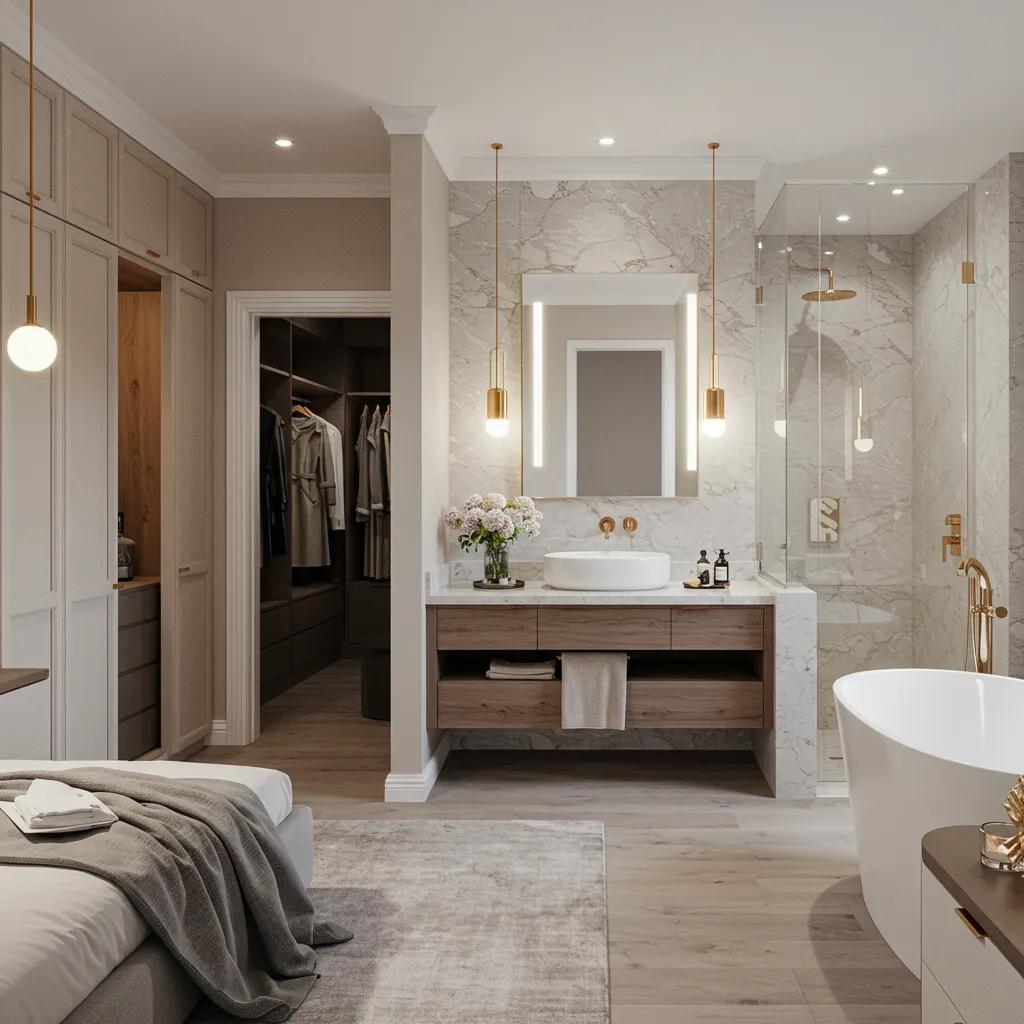
A modern master suite typically centers on a well-proportioned sleeping area connected to an en-suite bathroom with clear circulation and ample storage, delivering both privacy and functionality. Essential components include a spatial sequence that separates sleeping, dressing, and bathing zones, ventilation and daylighting strategies for comfort, and service routing that minimizes costly plumbing repositioning. Optional upgrades—like layered lighting, heated floors, or integrated storage—enhance luxury without altering core circulation, and designers should provide layout options for different budgets that prioritize key functional elements. These considerations naturally lead into how mudrooms can complement a home's daily organization.
How Does a Mudroom Addition Improve Home Organization and Flow?
A mudroom adds purposeful transition space that contains outdoor gear, manages dirt and moisture, and streamlines household movement between entry points and primary living areas. Durable materials—waterproof flooring, easy-clean wall finishes, and bench seating—paired with organized storage units reduce clutter and improve daily routines for busy families. Placement adjacent to a kitchen, garage, or primary entry optimizes circulation and creates logical service paths for laundry or pet care. Well-designed mudrooms therefore increase perceived livability and can prevent wear in main living areas, which supports overall interior longevity and resale appeal; next we move into cost and ROI considerations that help prioritize addition types.
How Much Do Different Types of Home Additions Cost and What Is Their ROI?
Cost estimates and ROI vary widely by region, materials, and complexity, but designers and homeowners can use general cost bands and typical ROI expectations to prioritize investments. Key cost drivers include structural changes (foundations, roof), utility extensions (HVAC, electrical, plumbing), glazing and finishes, and permitting or ADU regulatory compliance. Financing options such as home equity lines of credit, construction loans, or cash savings influence project phasing and client decisions, and the table below provides a comparative view of common additions with average cost ranges and typical ROI percentages to guide prioritization.
This table gives comparative cost bands and ROI guidance for common addition types.
Addition Type | Average Cost Range (USD) | Typical ROI (%) |
|---|---|---|
Room addition (single room) | $30,000–$120,000 | 50–75% |
Second story addition | $100,000–$300,000+ | 60–80% |
Garage conversion | $10,000–$60,000 | 60–80% |
ADU (attached/detached) | $75,000–$250,000 | 50–85% |
Sunroom / four-season room | $20,000–$100,000 | 40–70% |
These ranges reflect broad industry patterns and help designers advise clients on prioritization; next we offer financing options and budgeting tips to help translate ranges into actionable plans.
Financing and budgeting options often include:
Construction loan or mortgage refinance: Structured for larger projects with staged draws.
Home equity line of credit (HELOC): Flexible access to funds for phased improvements.
Cash savings or staged design build: Minimizes finance cost but may extend timelines.
Choosing the right financing strategy aligns project scope with client risk tolerance and timeline; the following short list ranks additions by typical ROI and explains contextual factors that influence value.
Which additions often provide the best return:
Kitchen or bathroom expansions/renovations: Strong resale appeal and functional impact.
ADUs (where permitted): Rental income potential enhances overall investment return.
Garage conversions (for added living space): Low entry cost with good value capture.
ROI depends on local market demand, execution quality, and integration with existing architecture, and the next major section shows how interior designers can use SaaS tools to plan and visualize these addition types effectively.
How Can Interior Designers Use SaaS Tools to Plan and Visualize Home Additions?
SaaS tools designed for interior designers accelerate planning by combining streamlined workflows, visual fidelity, and shared collaboration features that reduce iterations and improve client buy-in. Core capabilities—3D visualization, template libraries, and collaboration tools—map directly to addition workflows: 3D renders clarify spatial relationships for second-story layouts, templates speed schematic layouts for ADUs, and collaborative commenting reduces design-to-construction errors. The table below maps common addition types to SaaS features and the designer benefits they deliver, helping firms adopt tool-led processes that save time and lower change-order risk.
This EAV table maps addition types to SaaS features and clear designer benefits.
Addition Type | SaaS Feature (3D Viz / Template / Collaboration) | Designer Benefit / Use Case |
|---|---|---|
Second story | 3D visualization + structural template | Validate vertical circulation and load paths before engineering |
Sunroom / four-season | Material library + glazing templates | Compare glazing options and thermal performance visually |
ADU | Detached ADU templates + permit checklist | Rapidly produce compliant layouts and client approvals |
Using these tools as part of a repeatable workflow shortens approval cycles and clarifies cost drivers for clients; the next subsections explain 3D visualization benefits and collaboration practices in more detail.
How Does 3D Visualization Enhance Client Understanding of Home Additions?
3D visualization turns abstract plans into tangible spatial experiences by illustrating proportion, daylight, and materiality in a way that annotated 2D plans cannot, enabling earlier consent and fewer late-stage revisions. Render sets and virtual walkthroughs allow clients to evaluate sight lines, ceiling heights, and finish palettes, reducing the frequency of subjective change requests during construction. Designers should deliver a set of views—exterior massing, interior perspective, and annotated plan overlays—to align expectations and budgets. Early investment in visualization therefore directly reduces estimate uncertainty and supports faster decision cycles, which dovetails with collaborative practices described next.
What Collaboration Tools Help Streamline Home Addition Projects?
Collaboration tools centralize feedback, version control, and contractor handoff documents so that decisions and design intent travel with the project rather than via fragmented emails or meetings. Features like layered comments on plans, change history, and role-based permissions keep stakeholders aligned and preserve decision rationales for permitting and construction. Templates and integrated checklists speed handoffs to engineers and builders, reducing misinterpretation and rework during construction. Establishing a shared folder of deliverables and a standardized review cadence ensures smooth execution, and a designer can amplify these benefits by combining SaaS features with clear documentation and contractor coordination.
SaaS Integration Note: SaaS for Interior designer Framer template offers streamlined design process features including 3D visualization, a template library, and collaboration tools that map well to the workflows described above. Designers exploring trial options can evaluate workflow fit through short demonstrations or trial access to test deliverables and team collaboration.
Frequently Asked Questions
What are the key factors to consider when planning a home addition?
When planning a home addition, several key factors should be considered. First, assess your budget, as costs can vary significantly based on the type of addition and materials used. Next, evaluate local zoning laws and building codes, which can affect what is permissible. Additionally, consider the impact on your home's existing structure and systems, such as plumbing and electrical. Finally, think about how the addition will enhance your lifestyle and meet your family's needs, ensuring it aligns with your long-term goals.
How can I determine the best type of home addition for my needs?
To determine the best type of home addition, start by identifying your primary needs—whether it's more living space, a home office, or a rental unit. Consider the layout of your current home and how the addition will integrate with existing spaces. Evaluate your property’s size and zoning restrictions, as these will influence your options. Consulting with an interior designer or architect can provide valuable insights into the most functional and aesthetically pleasing solutions tailored to your specific requirements.
What are the common challenges faced during home addition projects?
Home addition projects often come with challenges such as navigating local building codes and obtaining necessary permits, which can delay timelines. Structural issues may arise, requiring additional reinforcement or modifications to existing systems. Budget overruns are also common, especially if unexpected complications occur. Effective communication with contractors and designers is crucial to mitigate these challenges, ensuring that everyone is aligned on expectations, timelines, and costs throughout the project.
How can I finance a home addition effectively?
Financing a home addition can be approached through various methods. Home equity lines of credit (HELOCs) are popular as they allow homeowners to borrow against their property’s equity. Construction loans are another option, providing funds specifically for building projects. Additionally, some homeowners choose to save cash upfront to avoid interest costs. It’s essential to evaluate your financial situation and consult with a financial advisor to determine the best financing strategy that aligns with your budget and project scope.
What role does an architect play in the home addition process?
An architect plays a crucial role in the home addition process by providing expertise in design, functionality, and compliance with building codes. They help translate your vision into a feasible plan, ensuring that the addition integrates seamlessly with the existing structure. Architects also assist in obtaining necessary permits and can coordinate with contractors during construction to ensure that the project adheres to the design specifications. Their involvement can enhance the overall quality and value of the addition, making it a worthwhile investment.
How do I ensure my home addition is energy efficient?
To ensure your home addition is energy efficient, focus on high-quality insulation, energy-efficient windows, and sustainable materials. Incorporating passive design strategies, such as optimal window placement for natural light and ventilation, can significantly reduce energy consumption. Additionally, consider installing energy-efficient HVAC systems and appliances. Working with a designer who specializes in sustainable building practices can help you make informed choices that enhance comfort while minimizing environmental impact and utility costs.
What are the long-term benefits of adding a home addition?
Adding a home addition can provide numerous long-term benefits, including increased living space that enhances comfort and functionality for your family. It can also significantly boost your property’s market value, making it a smart investment. Additionally, well-planned additions can improve energy efficiency, leading to lower utility bills. They can also accommodate changing family needs, such as multi-generational living or home offices, ensuring your home remains adaptable and relevant over time.
Conclusion
Home additions significantly enhance living space, improve functionality, and can increase property value when executed thoughtfully. Understanding the various types of additions, from sunrooms to ADUs, empowers homeowners and designers to make informed decisions that align with their needs and goals. By leveraging the insights provided in this guide, you can confidently explore the best options for your home. Start planning your ideal home addition today and transform your living space into a more functional and enjoyable environment.
Nov 11, 2025